

MOTS-c UAE: Mitochondrial Peptide Research Guide 2026
Last updated: 19 April 2026 · Reviewed by the Emirates Peptides Research Team · 10-minute read
MOTS-c occupies a niche that no other peptide fully fills. While GLP-3, Tirzepatide, and Semaglutide act on surface-level incretin receptors, MOTS-c operates one layer deeper — inside the mitochondria themselves. For UAE biohackers building longevity and metabolic stacks, this distinction is the reason MOTS-c became our second-highest-selling research peptide in 2026. This guide covers what MOTS-c is, where it comes from, how it works, how it fits alongside your other stack components, and how to verify research-grade quality when sourcing it in Dubai and across the Emirates.
What is MOTS-c?
MOTS-c is a 16-amino-acid peptide encoded not in the cell nucleus — like almost every other hormone you have heard of — but inside the mitochondrial DNA itself. It was discovered in 2015 by a team at the University of Southern California led by Dr. Pinchas Cohen, who found that the mitochondrial 12S ribosomal RNA gene contains an open reading frame producing this small bioactive peptide.
The name is an acronym: Mitochondrial Open reading frame of the Twelve S rRNA coding region. In practice, the name doesn’t matter — what matters is that MOTS-c represents one of the first examples of a “mitokine” — a signaling molecule produced by mitochondria that regulates metabolism at the whole-organism level.
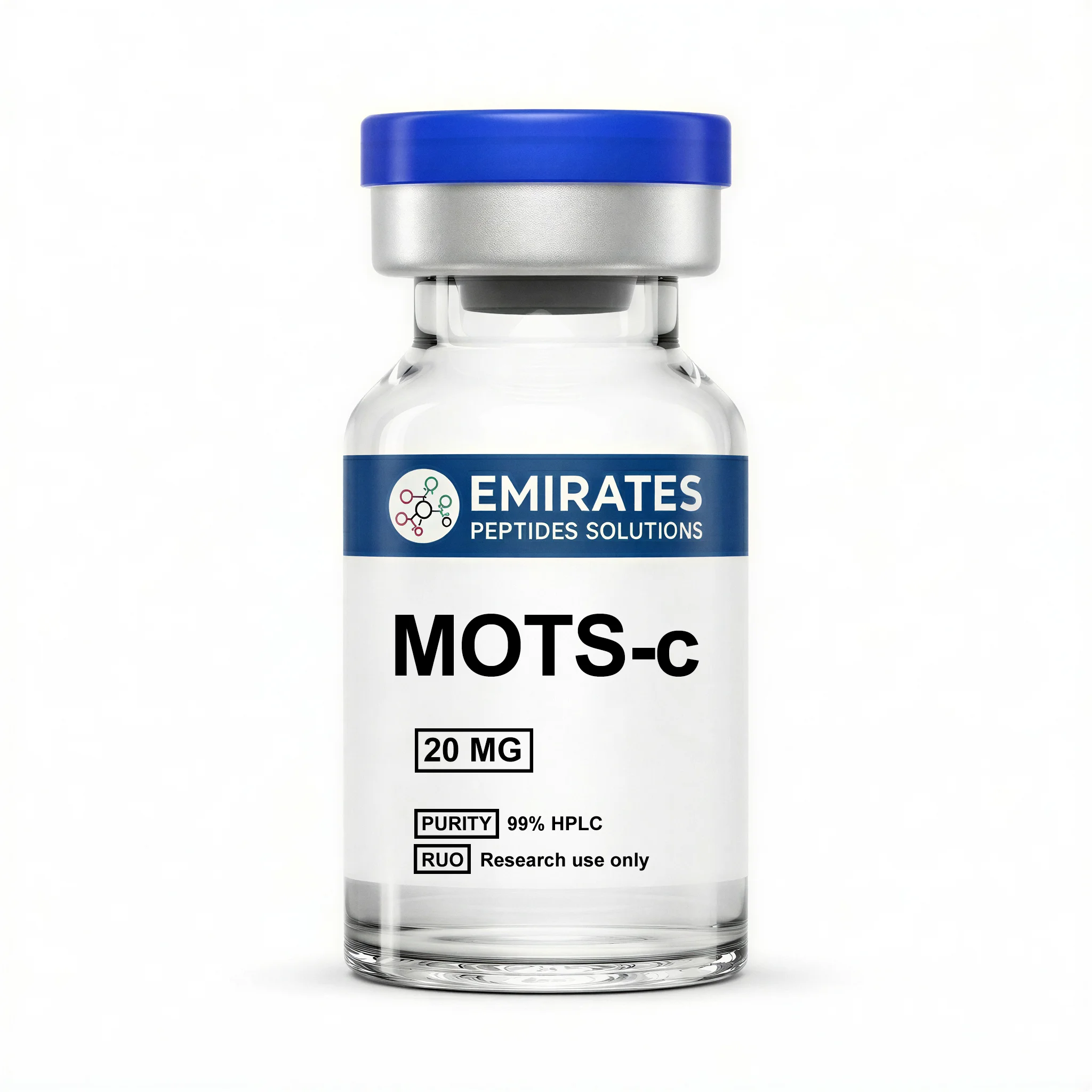
Its sequence is MRWQEMGYIFYPRKLR. It is supplied by Emirates Peptides as a lyophilized powder, stable at 2–8°C for 24 months and typically reconstituted with bacteriostatic water for research protocols.
How MOTS-c works: the mitokine mechanism
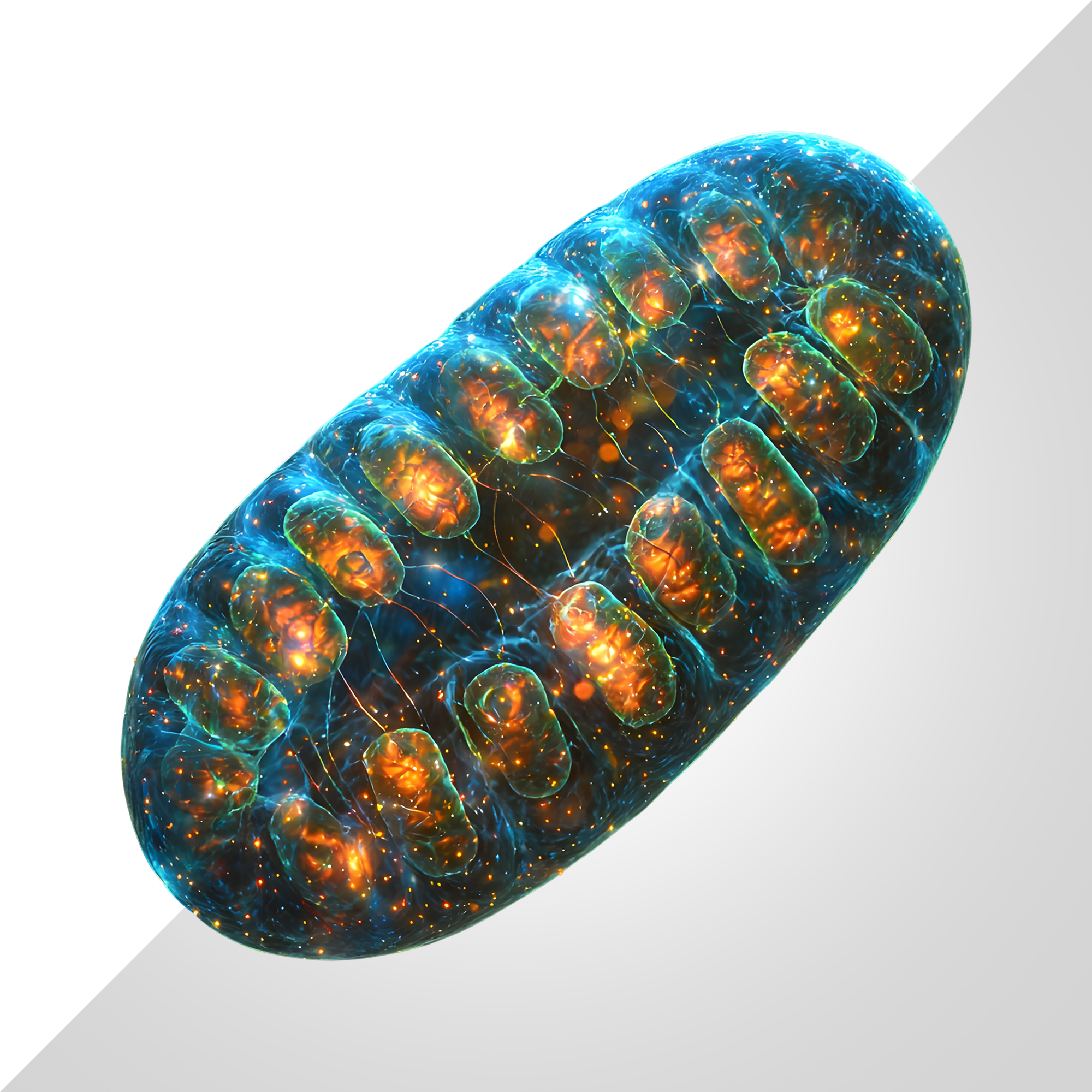
Mitochondria are traditionally described as “cellular powerhouses,” but MOTS-c reveals a second role — mitochondria act as endocrine organs, sending out small peptide signals to coordinate whole-body metabolism. MOTS-c exerts its effects through several converging pathways:
- AMPK activation. MOTS-c triggers AMP-activated protein kinase, the master regulator of cellular energy status. AMPK activation increases glucose uptake, shifts cells toward fatty-acid oxidation, and upregulates mitochondrial biogenesis — the creation of new mitochondria.
- Insulin sensitivity. Preclinical and early human data show MOTS-c improves insulin sensitivity independently of body weight change. This matters for biohackers tracking continuous glucose monitor data.
- Exercise capacity. Published animal studies show that MOTS-c injection increases running endurance measurably, consistent with its role as an exercise-mimetic signaling peptide.
- Longevity-associated pathways. Circulating MOTS-c levels decline with age in humans, and Japanese centenarian cohorts show elevated MOTS-c compared to younger controls — suggesting an association with exceptional longevity.
The practical result: MOTS-c does not cause rapid visible body changes the way GLP-3 does. Its benefits show up in the data — resting glucose, HbA1c, VO₂ max, sleep architecture, and the subtle markers of metabolic flexibility that longevity-focused users track through wearables and bloodwork.
Why UAE biohackers stack MOTS-c with GLP-3

Our customer data tells a clear story. GLP-3 drives appetite suppression and fat oxidation through incretin receptors. MOTS-c works at a different layer — making the mitochondria themselves more efficient. When stacked, the two peptides complement rather than overlap:
- GLP-3 handles the caloric-deficit side (less food, more metabolic rate from glucagon).
- MOTS-c makes the existing mitochondria burn the fuel more efficiently.
- The combination theoretically addresses both “intake” and “utilization” — which is why our order data shows 3 out of 19 GLP-3 buyers also ordered MOTS-c in the same cart.
Biohackers in Dubai Marina, Dubai Hills, Al Furjan, and Abu Dhabi — the residential concentrations we see in our order data — are not chasing rapid scale-weight drops. They are tracking resting heart rate, HRV, deep-sleep duration, and morning fasting glucose on wearables like Oura, Whoop, and Apple Watch. MOTS-c is the peptide that tends to move those deeper markers.
Typical research dosing protocols
Published preclinical studies and early-stage human research on MOTS-c report weekly dose ranges between 5 mg and 20 mg, typically split across 2–3 subcutaneous injections per week. Because MOTS-c has a shorter half-life than GLP-1-class peptides, consistent scheduling matters more than raw dose.
Reported research protocols include:
- Conservative entry protocol: 5 mg total weekly, split Monday / Thursday (2.5 mg per injection). Used for early tolerability assessment.
- Standard protocol: 10 mg total weekly, split Monday / Wednesday / Friday. Most commonly reported in metabolic-research literature.
- Upper protocol: 15–20 mg total weekly, split 3× per week. Reserved for extended longevity-research studies.
These figures are taken from published preclinical and early-phase literature. MOTS-c supplied by Emirates Peptides is provided strictly for in-vitro research and laboratory use. The dosing figures above are referenced for researchers designing study protocols; they are not prescriptive for human administration, which is not an approved use.
Quality standards for research-grade MOTS-c

MOTS-c is a small peptide (16 amino acids) that is relatively stable during synthesis — but small variations in manufacturing can produce significant differences in biological activity. When sourcing MOTS-c for research in the UAE, verify the following:
- HPLC purity ≥ 99%. Low-purity MOTS-c may contain truncated fragments or oxidized variants that do not activate AMPK effectively. Ask for the HPLC trace, not just the percentage.
- Mass-spectrometry confirmation of the exact sequence MRWQEMGYIFYPRKLR. Sequence confirmation prevents substitution with similar-looking peptides.
- Lyophilization quality. MOTS-c should appear as a fine white powder with no discoloration or visible moisture. Emirates Peptides lyophilizes every batch under nitrogen atmosphere.
- Batch-labeled COA. Each vial from Emirates Peptides carries a batch number matching a specific Certificate of Analysis available on request.
- Cold-chain delivery. In UAE summer temperatures, unprotected peptide shipments can lose potency in transit. Same-day cold-chain delivery across Dubai and next-day across the emirates is standard with Emirates Peptides orders.
Storage, reconstitution, and handling
Lyophilized MOTS-c from Emirates Peptides stores at 2–8°C (refrigerator temperature) for up to 24 months. For long-term storage exceeding 2 years, freeze at −20°C. Once reconstituted with bacteriostatic water, the solution remains potent for approximately 28 days when refrigerated and protected from light.
For a standard 10 mg MOTS-c vial, 2 mL of bacteriostatic water produces a 5 mg/mL working concentration — convenient for the 2.5 mg or 5 mg per-injection research doses commonly cited in the literature.
MOTS-c vs other longevity peptides
| Peptide | Target | Primary effect | Best stacked with |
|---|---|---|---|
| MOTS-c | AMPK / mitochondria | Mitochondrial efficiency, insulin sensitivity, endurance | GLP-3, Epithalon |
| Epithalon | Telomerase / pineal | Telomere maintenance, sleep architecture, circadian rhythm | MOTS-c, GHK-Cu |
| NAD⁺ | Sirtuins / SIRT1, SIRT3 | DNA repair, cellular energy currency | MOTS-c, Epithalon |
| GLP-3 | GIP/GLP-1/glucagon | Appetite, energy expenditure, fat oxidation | MOTS-c, Cagrilintide |
| GHK-Cu | Copper-binding tripeptide | Collagen, skin, tissue remodeling | Topical or IM; longevity adjunct |
Safety and side-effect considerations
Published research on MOTS-c reports a mild side-effect profile. The most frequently mentioned events are localized injection-site reactions (redness or transient tenderness) and, at higher doses, a brief sensation of warmth following administration. Serious adverse events have not been reported in the preclinical and early-phase literature, though the human safety database remains much smaller than for GLP-1-class peptides.
Because MOTS-c activates AMPK — the same pathway targeted by metformin — researchers stacking MOTS-c with metformin should consider potential additive effects on insulin sensitivity. This is part of the protocol design responsibility of the qualified research professional, not a contraindication per se.
Frequently asked questions
Is MOTS-c legal to purchase in the UAE?
MOTS-c supplied by Emirates Peptides is sold strictly for laboratory and in-vitro research use. It is not approved for human administration in the UAE or any other jurisdiction. Purchasers must comply with all applicable local regulations.
How does MOTS-c differ from NAD⁺ or metformin?
All three target cellular energy metabolism but through different entry points. MOTS-c is a mitochondrial-derived peptide that directly activates AMPK signaling. NAD⁺ is a coenzyme substrate for the sirtuin family of deacetylases. Metformin is a small-molecule drug that indirectly activates AMPK through inhibition of the mitochondrial electron transport chain complex I. Each compound has a different kinetic profile, tissue distribution, and mechanism, so they are often discussed as complementary rather than redundant.
What vial sizes of MOTS-c are available at Emirates Peptides?
MOTS-c is offered in 10 mg and 20 mg lyophilized vials. The 20 mg vial offers the most efficient per-milligram pricing for extended research protocols.
What is the purity standard?
Every batch of MOTS-c supplied by Emirates Peptides is independently tested by High-Performance Liquid Chromatography and verified at ≥99% purity. Each vial is labeled with a batch number and analytical data matching its Certificate of Analysis.
Can MOTS-c be stacked with GLP-3?
The two peptides operate at different metabolic layers — GLP-3 on incretin receptors, MOTS-c on mitochondrial AMPK signaling — making them mechanistically complementary. Emirates Peptides customer data shows that a meaningful fraction of GLP-3 buyers also purchase MOTS-c in the same cart. Stack design is the responsibility of the qualified research professional.
How quickly does MOTS-c ship across the UAE?
Same-day cold-chain delivery for Dubai orders placed before 4 PM, next-day delivery across all seven emirates, and expedited shipping to neighboring GCC countries on request.
Does MOTS-c cause weight loss?
MOTS-c does not induce the rapid caloric-deficit-driven weight reduction associated with GLP-1-class peptides like GLP-3. Its effects are more subtle, showing up in insulin sensitivity markers, fasting glucose, and exercise tolerance. Research subjects tracking body composition often report slow favorable changes over 8–12 weeks rather than dramatic scale-weight drops.
How is MOTS-c reconstituted?
Lyophilized MOTS-c is reconstituted with bacteriostatic water. The 0.9% benzyl alcohol preservative maintains sterility through a 28-day in-use window when refrigerated.
Get research-grade MOTS-c in the UAE
Emirates Peptides offers MOTS-c in 10 mg and 20 mg lyophilized vials, each HPLC-verified, sealed under inert atmosphere, and supplied with cold-chain delivery across the UAE.
View MOTS-c product page & pricing →
Selected references
- Lee C, Zeng J, Drew BG, et al. “The mitochondrial-derived peptide MOTS-c promotes metabolic homeostasis and reduces obesity and insulin resistance.” Cell Metabolism. 2015;21(3):443–454.
- Reynolds JC, Lai RW, Woodhead JST, et al. “MOTS-c is an exercise-induced mitochondrial-encoded regulator of age-dependent physical decline and muscle homeostasis.” Nature Communications. 2021;12(1):470.
- Yen K, Mehta HH, Kim SJ, et al. “The mitochondrial derived peptide humanin is a regulator of lifespan and healthspan.” Aging. 2020;12(12):11185–11199.
Disclaimer: Emirates Peptides supplies MOTS-c as a research-grade lyophilized peptide for laboratory and in-vitro research only. Not for human administration. Researchers are responsible for compliance with applicable local and international regulations.


